 Ironstone
An AI website builder for small business is worth using, if you build websites for local owners, when it does more than make a page. It should build from the business's real listing and current website, look right on a phone, take changes in plain words, keep every version, send in your name, take approval and payment in one link, and leave the domain with the owner. You can test one on a real business in an evening with the nine checks below, shown with screens from the app we built.
Key facts
- In Clutch's 2025 survey, 45% of small business websites were built by outside partners, more than by in-house teams or by owners themselves. 1
- In a 2025 survey of more than 1,000 people reported by CX Dive, 83% of US consumers had used a search engine to find a local business in the past month. 2
- In the Census Bureau's Business Trends and Outlook Survey (story of May 26, 2026), less than 20% of US firms with four or fewer employees reported using AI. 6
- At the middle of 25 checks between October 27 and November 17, 2026, Lead finder checked a business's website for partners in 336 milliseconds, about a third of a second. 4
What is an AI website builder for small business?
An AI website builder for small business is a tool that builds a finished website for a local business in minutes, from its real details: its listing, its current website, its hours, services and photos. For a partner, it's the tool you build every client's website with, and the good ones also handle what comes after the build: changes, sending, approval, payment and the domain. That second half is where builders differ.
Owners rarely want to run a builder themselves. They want the phone to ring, the right hours online, and to look as real online as they do on the street. What they pay a person for is someone local who builds it, sits down to show it, and looks after it every month. That's why the builder you pick has to serve you, not the owner.

This post is about choosing and testing the builder, not the whole sale. Our guide on how to sell AI websites to local businesses walks through the sale step by step. Here you'll find what the builder must do and how to test one on a real business in an evening. We don't name any builder, because the checks work on all of them.
Why do small businesses pay someone to build their website?
Owners pay for time and for knowing what customers look for, not for access to a tool. The tools are within reach of any owner, yet the work still gets handed to someone else. Three survey figures show how often that happens and why it matters to the owner.
of small business websites were built by outside partners in Clutch's 2025 survey, more than by in-house teams or by owners themselves. Building websites for owners is the usual way, not the exception. 1
of US consumers used a search engine to find a local business in the past month, in a 2025 survey of more than a thousand people. The website a builder makes is what those customers land on. 2
of US consumers are unlikely to visit a business whose online listing has wrong information, in a 2025 local search study. A builder that gets the hours or phone number wrong costs the owner the visit. 3
In Clutch's 2025 survey, 17% of small businesses still had no website, and over a third of those say a website isn't relevant to them. You won't change that view with an argument. A builder that puts a finished website for their own business on the owner's phone answers it better than anything you could say. 1
How many small businesses could use a website built for them?
Millions of US businesses could, far more of them with no paid employees than with staff. In our own checks, a share of local businesses also had a gap you can see. The two Census figures come first, then our own table.
US businesses had no paid employees in 2022, in the Census Bureau's 2022 Nonemployer Statistics. An owner with no staff has no one else to build the website. 5
US businesses had paid employees in 2022, in the Census Bureau's 2022 County Business Patterns. Even with staff, the website is rarely anyone's job. 5
Between October 8 and November 17, 2026, Lead finder, our business lookup tool, showed 6 partners 56 local businesses with a gap an owner can see. We left our own accounts out. Of those, 28 had no website found, 16 had an outdated website, 6 had only a social or directory page, and 6 had only a booking or ordering service. The table shows the split. 4
| What Lead finder found | Of 56 businesses |
|---|---|
| No website found | 28 |
| Outdated website | 16 |
| Social listing only | 6 |
| Delivery page only | 6 |
In the Census Bureau's Business Trends and Outlook Survey (story of May 26, 2026), less than 20% of US firms with four or fewer employees reported using AI. So the owners with a gap are rarely the ones running an AI tool themselves. That's the room a partner fills when they bring a good builder to the table. 6
What should an AI website builder for small businesses do?
A good builder does seven things: it builds from the real listing, looks right on a phone, takes changes in plain words, keeps every version, sends in your name with an opt-out line, takes approval and payment in one link, and leaves the domain with the owner. The table gives each one, why the owner cares, and the test you run on one real business.
| What it should do | Why the owner cares | How to test it |
|---|---|---|
| Build from the business's real listing and current website | Wrong hours or a wrong phone number cost the owner the visit | Build one real business and compare name, phone, address, hours and services with its listing, line by line |
| Look right and load fast on a phone | Customers look the business up on a phone before they call or visit | Run the new address through a phone speed report (step 4) and tap Call |
| Take a change asked in plain words | Owners want new hours, a holiday notice or a photo up soon | Ask for "move the hours to the top" and note how long the website takes to show it |
| Keep every version and bring one back | An owner who dislikes a change wants yesterday's website back the same day | Make a change, then restore the version before it and check nothing was lost |
| Send the website in your name, with an opt-out line | The owner hears from a local person, not from a software company | Send the first message to your own address and read the sender name, link and opt-out line |
| Approval and payment in one link | The owner approves the exact website they saw, while the yes is fresh | Open the approval link yourself and check the website, monthly price and card page belong together |
| Leave the domain and the content with the owner | The business keeps its name online, whoever builds or looks after the website | Read where the owner connects a domain and what happens when a card payment fails |
A builder that makes a good-looking page but fails the last three rows leaves you doing that work by hand for every client. The nine steps below test each row on one business, and step 9 turns the results into a score you can compare.
How do you test an AI website builder on a real small business in 9 steps?
To test a builder, pick one real business with a gap, build its website, and put the result through nine checks, from its facts to its domain. You need one evening, a phone and a laptop. The screens show our app with fictional businesses.
- Steps 1 to 3 test the build: the business, its facts and its first screen.
- Steps 4 and 5 test the website after the build: phone speed, changes and versions.
- Steps 6 to 9 test the work around it: sending, payment, the domain and the score.
1. Which real business will you test the builder on?
Test on one real local business with a gap an owner can see, of a type you want to sell to. This matters because a demo business only shows what the builder does with perfect details. A real one shows what it does with the thin listings you'll meet every week. Those thin listings are the everyday work, so they're the fair test of any builder.
Here's the twist: pick the thinnest listing, not the best one, because that's where builders invent things. Between October 8 and November 6, 2026, the middle one of 54 Lead finder searches partners ran returned 17 local businesses, and 48 of 54 returned at least one. So there's always a thin listing to choose from. 4
To do it by hand, search "[type] near [town]" in Google Maps. Open each listing. No Website button, or a link to a social page only, is a gap. Note how much the listing holds: hours, photos, a list of services. Then copy the name, phone, the gap and what the listing holds into one row in Google Sheets, so you can come back to it.
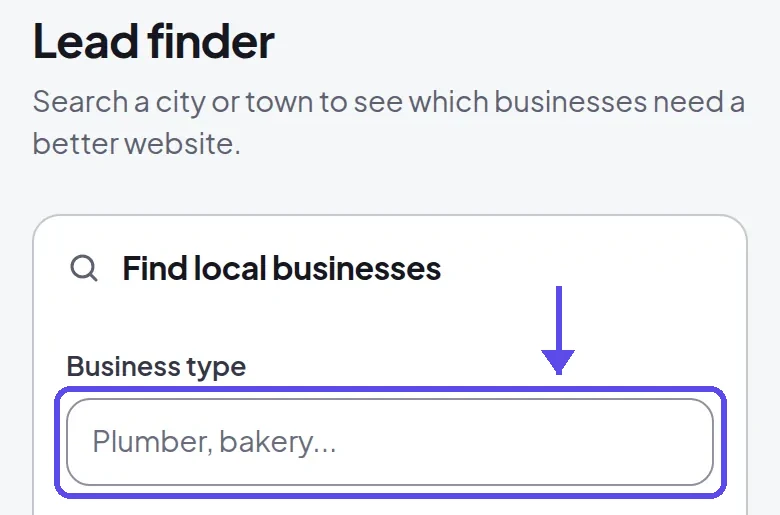
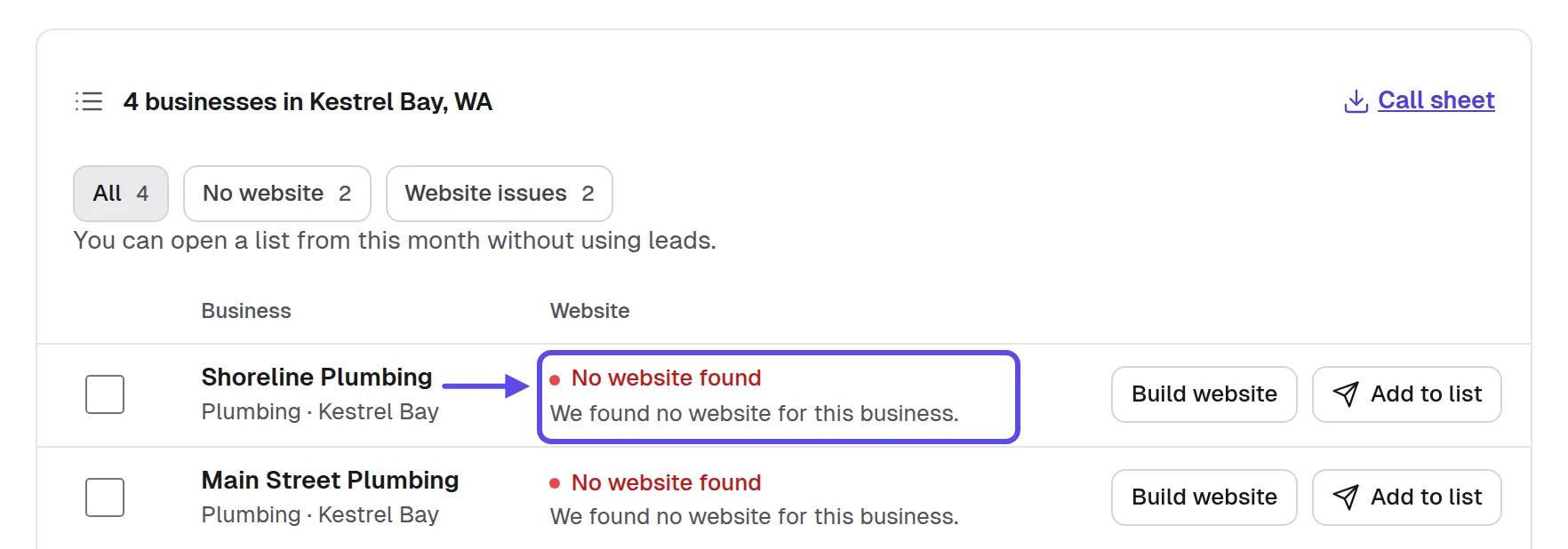
In our app, Lead finder searches a business type in a town and labels each business: No website found, Social listing only, Website won't open, Outdated website or Delivery page only. Under each label is a line you can say to the owner. At the middle of 25 checks between October 27 and November 17, 2026, it checked a business's website in 336 milliseconds, about a third of a second. 4
- The business is real, open and taking customers
- It has a gap the owner can see
- Its listing is thin: few photos, short description
- It's a type you want to sell to
- You could call or visit it this week
You know it worked when you have one business in one row: its name, its gap and what its listing holds. It's ready to build, and it's the kind of business you'll meet again and again.
Tip
Test on the business you'd really sell to next. A perfect demo business tells you nothing about a thin listing.
2. Does the builder bring in the business's real facts?
A good builder brings in the name, phone, address, hours, services and photos from the public listing and current website, and it invents nothing. This matters because in Rio SEO's 2025 Local Search Consumer Behavior Study, 53% of US consumers are unlikely to visit a business whose online listing has wrong information. Customers read a website the same way. One wrong number can cost the visit. 3
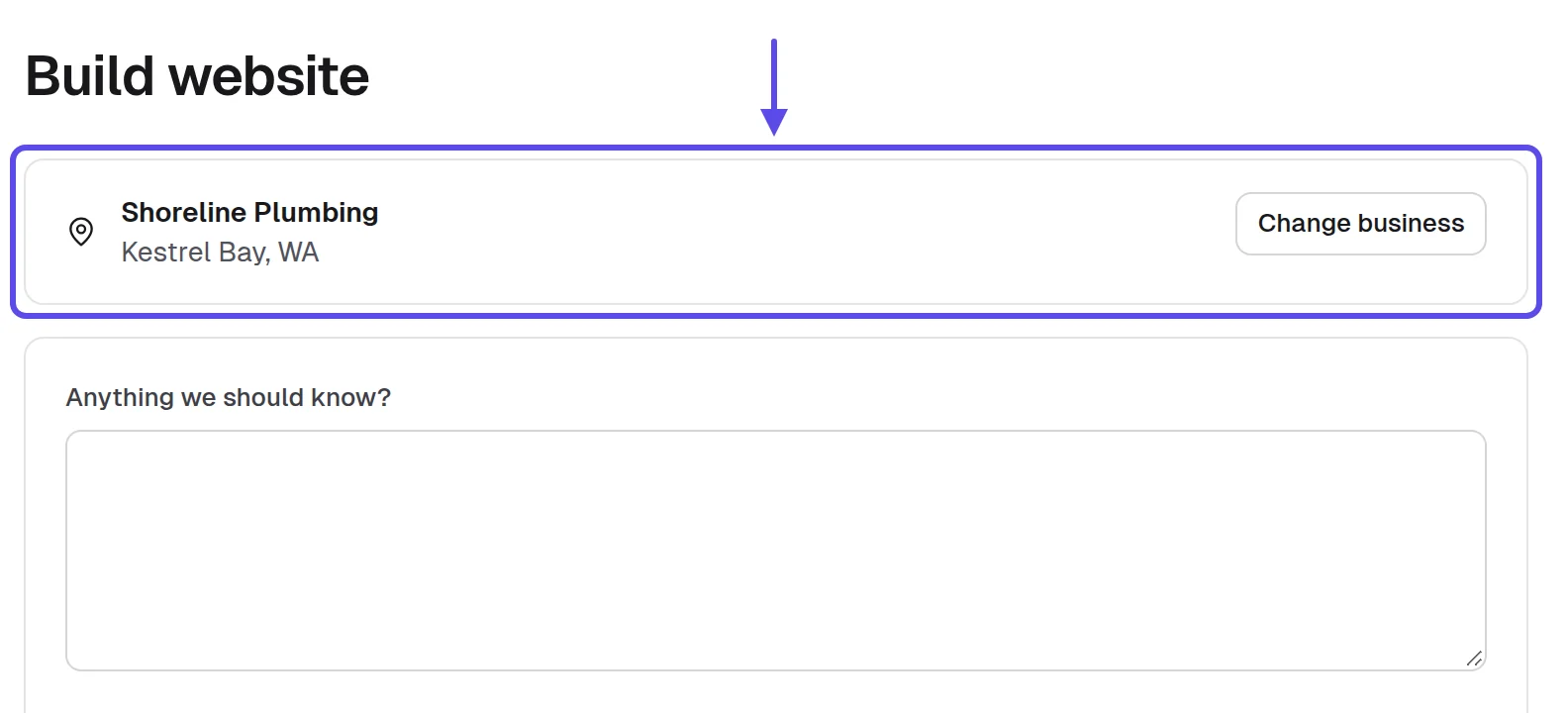
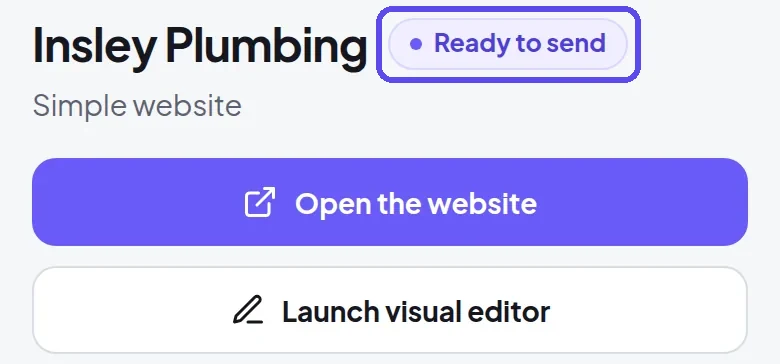
When our app builds a website, it brings in the business's public listing and its current website. So the new site shows the owner's real hours, services and photos instead of filler text. That matters, because an owner spots made-up details fast. A build takes minutes. Once it's finished, the website is marked Ready to send, and you can look it over before it goes anywhere.
The twist is that the builder only knows what's public. The owner knows what customers ask on the phone. Call at a quiet hour, say who you are, and write down the two or three questions customers ask the owner again and again. Those answers belong on the website, and no builder can find them for you.

By hand, compare each fact on the new website with the business's Google Business Profile listing as customers see it. If the business has an old website, open it in the Wayback Machine. You'll see which hours and services have stayed the same for years and which changed recently. Trust the ones that stayed put, and ask the owner about the rest.
- Name, phone and address match the listing
- Opening hours match, weekends included
- Every service listed is one they offer
- The photos are the business's own
- No review, award or year was invented
You know it worked when the website is marked Ready to send and every fact has a source you can point to, on the listing or on the old website. If you can't point to one, take it off.
Tip
Mark every fact you had to fix in your sheet. That count is the builder's real score on facts.
3. Does the first screen show what this business's customers want?
The first screen should show what the business does, where it is, and the one action its customers take: call, see the menu or book. This matters because a customer on a phone decides from that screen whether to stay. A builder that opens every business with the same headline wastes it. A plumber and a bakery need different first screens.
Here's the twist. In Pew Research Center's June 2025 survey, 76% of Americans say it is extremely or very important to be able to tell whether pictures, videos and text were made by AI or by people. A first screen of stock lines reads as machine-made, so use the business's own words and photos. Our post on why AI websites look the same goes deeper. 14
By hand, open the new website in Google Chrome on your laptop, then on your phone. Cover everything below the first screen with your hand. Then ask someone who doesn't know the business to tell you, in one glance, what it does, where it is and how to reach it. If they hesitate, the first screen needs work.
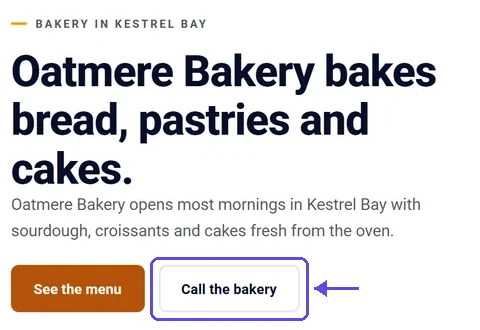
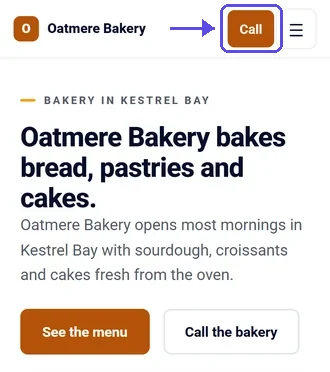
For Oatmere Bakery, the customer wants the menu and a way to order, so See the menu and Call the bakery sit at the top. If the first screen misses the action, ask for it in plain words: "put the call button and today's hours at the top." A good builder handles a request like that the way an owner says it.
- The business name and town on the first screen
- What they do, in plain words
- The one action: call, menu or booking
- The owner's own photo, not a stock one
- No headline that could fit any business
You know it worked when a stranger shown the first screen on your phone can say what the business does, where it is and how to reach it. No scrolling, and no guessing.
Tip
Build the first screen for the customer the owner wants more of. A plumber wants the emergency call, and a bakery wants the order before a holiday.
4. Is the website fast and easy to use on a phone?
It is when the page's largest content loads within 2.5 seconds and a tap or click gets an answer within 200 milliseconds. Those are the marks Google's web.dev gives for a good user experience, called Largest Contentful Paint and Interaction to Next Paint. They're the two numbers to read for every website a builder makes. 7
In Pew Research Center's survey of January 30 to June 18, 2026, 91% of US adults own a smartphone. That's why this matters: the owner's customers meet the website on a phone first. A builder that looks good only on a laptop fails the test that counts. 8
The twist: test the business's old website too, because the difference is what the owner understands. Of the 56 businesses with a gap Lead finder showed partners between October 8 and November 17, 2026, 5 had a website with no mobile layout and 7 had a website without a secure connection. Those owners will see the change on their own phone. 4
By hand, paste the new website's address into PageSpeed Insights and open the Mobile tab. Read the Largest Contentful Paint line and, where the report shows it, Interaction to Next Paint. Run the old website the same way and save both reports. Then pick up your own phone and tap the call button, the hours and the contact form, the way a customer would.
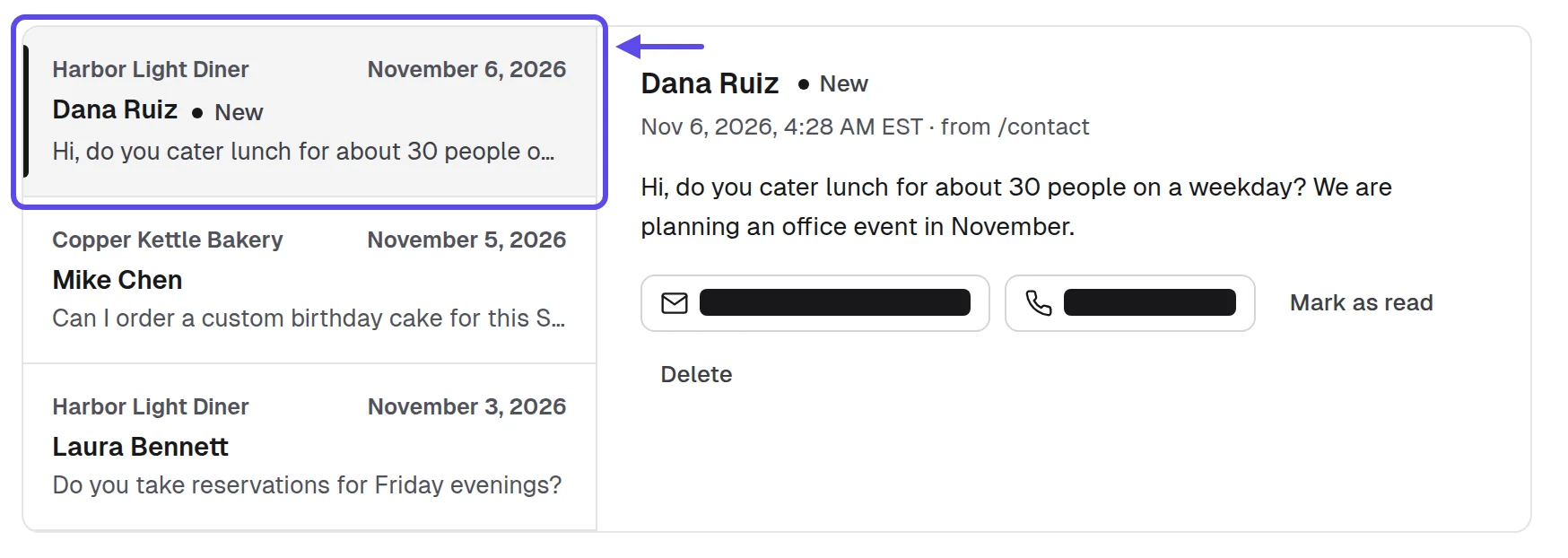
In our app, open the Ready to send website on your own phone and send a message through its contact form. Messages from every client website's contact form arrive in the Inbox, so you see at once whether the form works.
- The mobile report rates loading as good
- A tap gets an answer without a wait
- The call button dials from your phone
- Text reads without zooming in
- The contact form message reaches you
You know it worked when the new website loads and answers taps faster than the business's old one on the same phone. You also have both reports saved, ready to show the owner.
Tip
Run the old website through the same report first. The gap between the two is the one number an owner remembers.
5. Can you change the website in plain words and undo a change?
A good builder takes a change asked in plain words, updates the website in a few minutes, and saves every change as a version you can restore. This matters because owners ask for changes all year. A builder that needs a drag-and-drop session for each one eats the time you're paid for. Over a year of clients, those sessions add up.
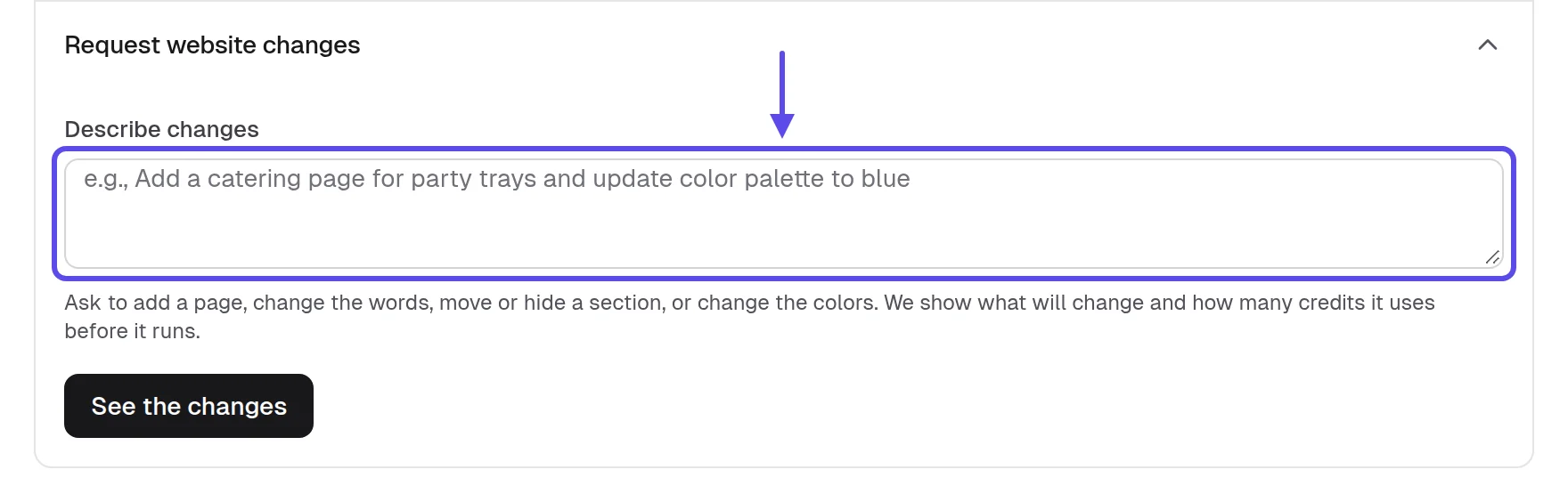
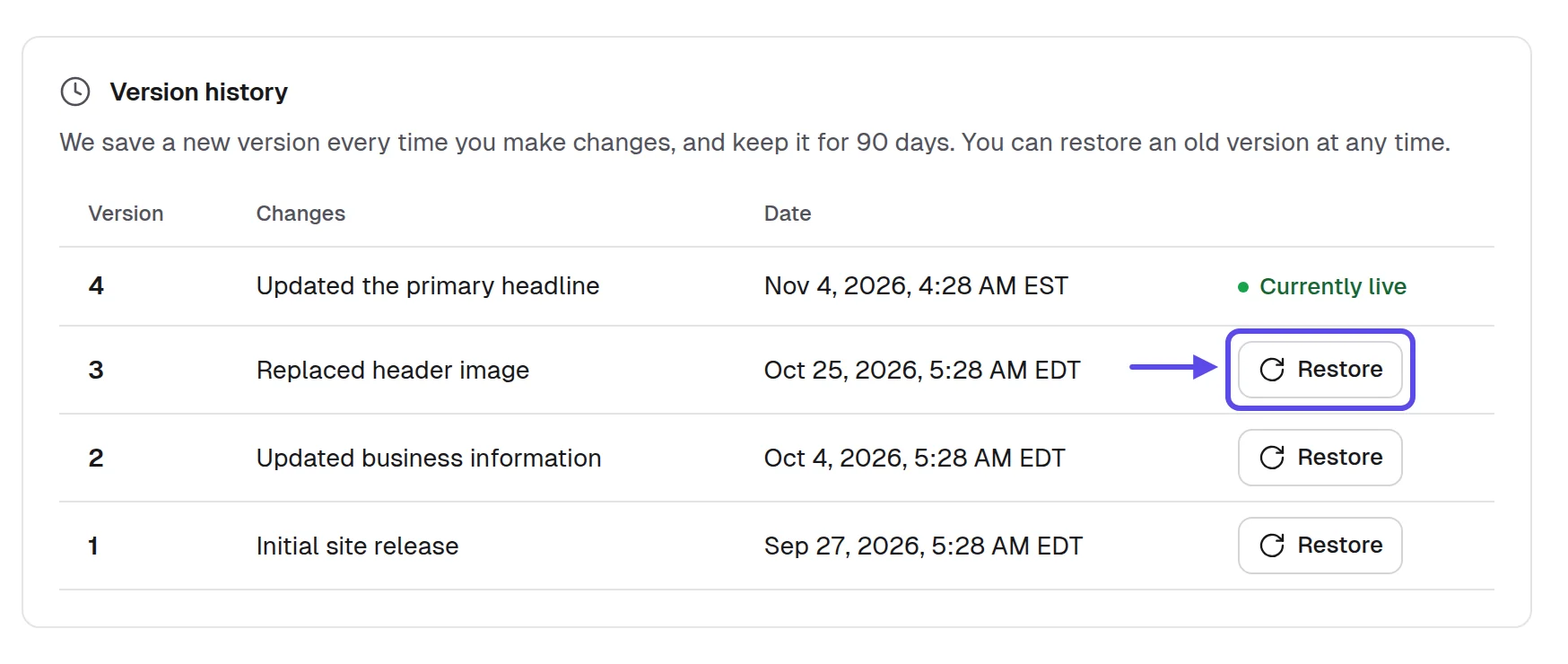
The twist: make a bad change on purpose, then go back to the version before it. A builder you can't undo makes you afraid to change anything. And an owner who dislikes a new photo wants yesterday's website back the same day.
In our app, ask for "move the hours to the top" or "add a catering page" and the website updates in a few minutes. Every change is saved as a version you can bring back. The History shows the live version marked, with Restore beside each older one. Try it on your test business before you trust it with a client.
By hand, keep one change log per client in Google Docs. Write the date, what the owner asked for in their own words, and what changed. When an owner asks what you did this month, you read it out. Keep it open while you work.
- A plain-word change shows in a few minutes
- The change did only what you asked
- Every change is saved as a version
- You can restore the version before it
- The live version is clearly marked
You know it worked when you made a change, disliked it and brought the old version back without losing anything else on the website. Try it twice, with two different changes.
Tip
Write each test change the way an owner would say it on the phone. That's how they'll ask.
6. Can you send the website to the owner in your own name?
You can when the builder writes a first message in your name, sends it by email or text or prints a flyer, adds an opt-out line to every email, and stops follow-ups when the business replies. This matters because an owner answers a person from their town. A message signed by a software company doesn't get the same answer.
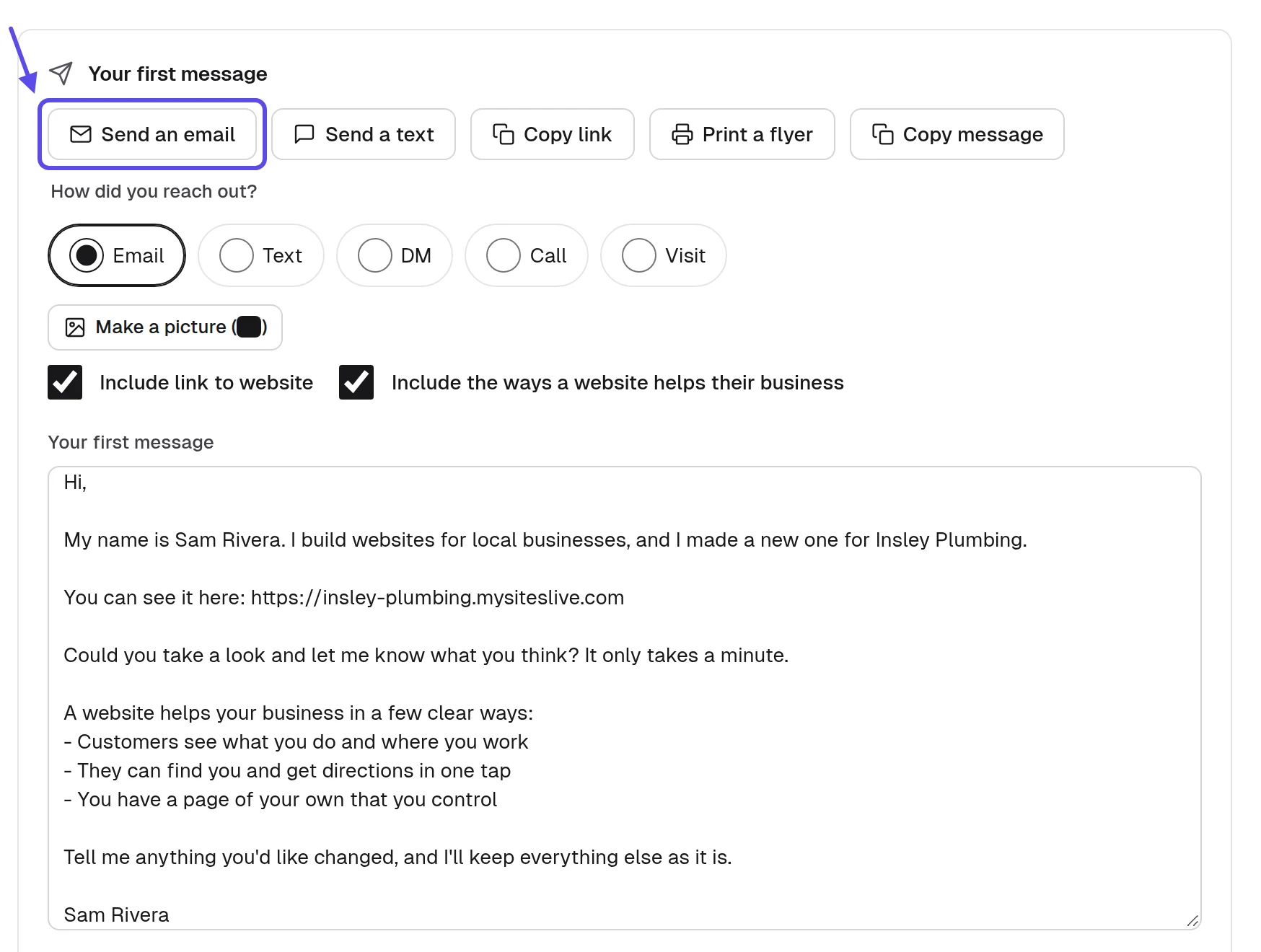
In the United States, the FTC's compliance guide to the CAN-SPAM Act says a commercial email must include your valid physical postal address and a clear way to opt out, and opt-out requests must be honored within 10 business days. Other countries have their own rules. 9
Our app writes a first message in your name with the link to the business's website. Every email carries an opt-out line. Follow-ups stop when the business replies, so no owner gets a reminder after they've answered. Read the first one before it goes, and change any word that doesn't sound like you.
By hand, write from Gmail, one business per message, each with its own link. Record a short screen video with Loom that scrolls the new website on a phone. Say the business name in the first five seconds, so the owner knows it's about them. Then put the video under the link in your email.

First email after building
Subject: I built [Business name] a website
Hi [Owner name],
I'm [Your full name] from [Your business name]. I built a website for [Business name] from its public listing, with your hours and services.
Here's the link, [Website link], and it works on a phone, so could you check that the hours and services are right?
This is an offer of a website: if you want it, I can put it live and look after it every month. I'd be glad to show it to you in five minutes.
If you'd rather not hear from me, reply "no thanks" and I won't write again.
[Your full name], [Your business name], [your mailing address]
Follow-up after three days
Subject: Re: a website for [Business name]
I wanted to check whether you saw the website I built for [Business name], which I'm offering to put live for you: [Website link]. I'm glad to change any detail that isn't right, such as the hours.
If you'd rather not hear from me, reply "no thanks" and this will be my last message.
[Your full name], [Your business name], [your mailing address]
- One business, one message, its own link
- Your full name and business name in it
- Your mailing address in every email
- A clear way to say no thanks
- Follow-ups stop when the owner replies
You know it worked when the test message reached your own inbox in your name, the link opened the website on your phone, and the opt-out line sat at the bottom.
Tip
Send the first message to yourself before any owner sees it. Read it on your phone the way the owner will.
7. Can the owner approve and pay in one step?
Yes, when one link shows the exact website with the monthly price and takes the card. In our app, an approval link opens a secure card payment page in your name, with your monthly price and any setup fee. Paying is the owner's approval of the exact website they saw. There's no second form to chase and no question about which version they said yes to.
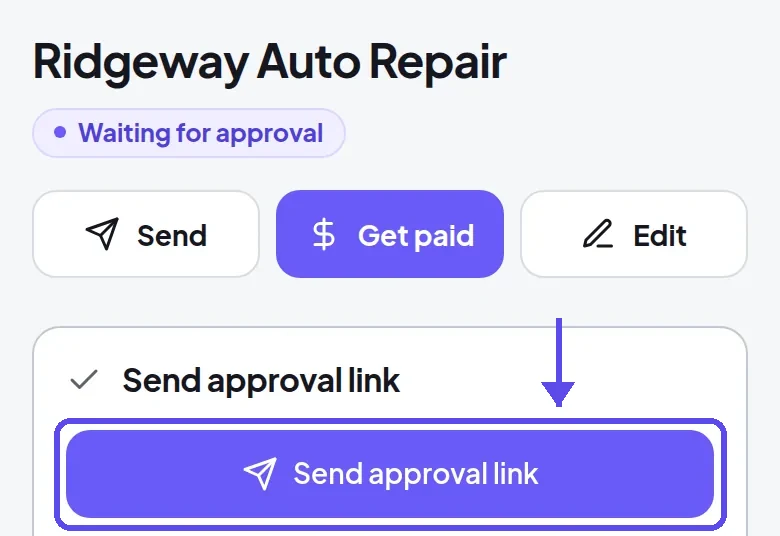
Here's the twist. When approval and payment are two separate steps, an owner can approve one version and pay for another, or say yes and never pay. One link that does both ends that. The yes happens while the owner is still looking at their website.
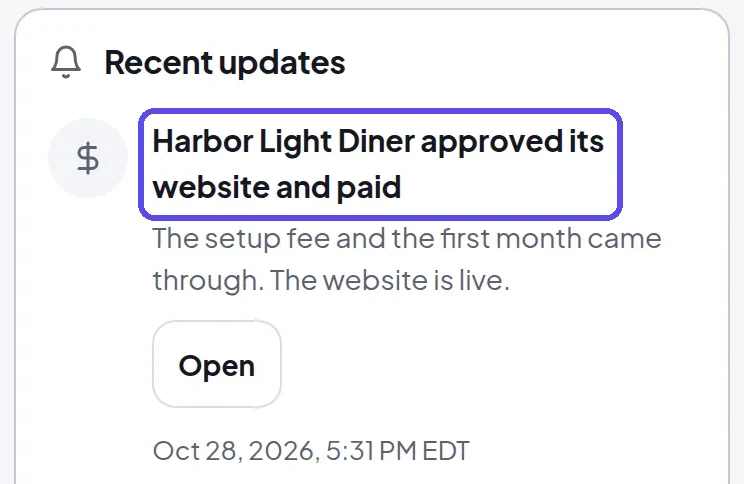
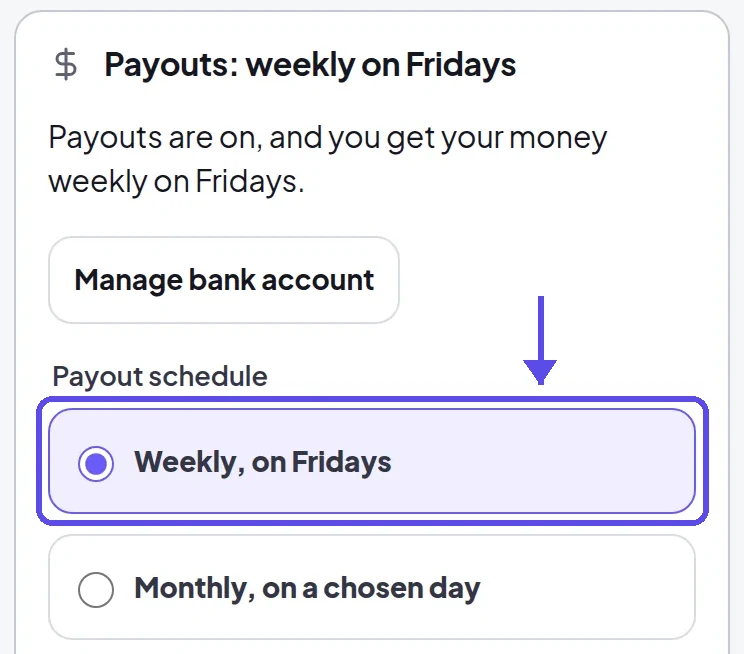
In our app, an approved website goes live at its address in a few minutes. Payouts reach your bank weekly on Fridays or monthly on a day you choose. The monthly price is yours to set, and our post on what to charge for a website goes through it.
By hand, without a builder that takes payment, you send a separate payment link and match it to the version yourself. After a first live payment, Stripe typically schedules the first payout to arrive within 7–14 days, depending on industry, country and risk level. If the owner wants to talk first, send a link from Calendly for a short call, and send the approval link at the end of it. 13
The approval message
Thanks again. Here's the link to approve [Business name]'s website: [Approval link]. It shows the website and the monthly price we agreed, and once you approve it, the website goes live.
- The link shows the website the owner saw
- The price matches what you said
- The card page is in your name
- Your bank is connected for payouts
- Tell the owner when it goes live
You know it worked when your own test of the approval link shows the website, the monthly price and the card page in your name, in that order. Check it on your phone too.
Tip
If the owner is ready, send the approval link while you're still with them. A yes cools by the next day.
8. Who owns the domain, and what happens when a payment fails?
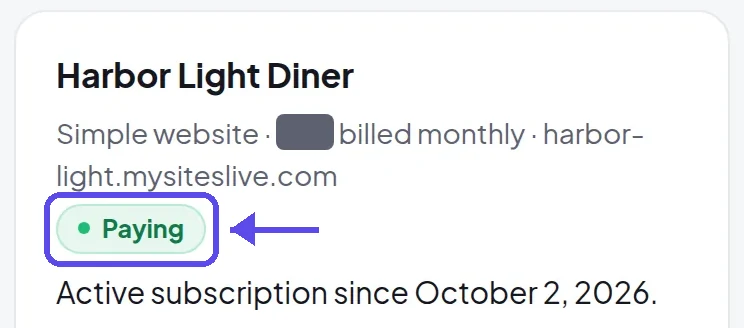
The business owns its domain and its content, and a failed card gets reminders before anything goes offline. An owner who already has one connects a domain in their own login, and it stays theirs. Before you promise that, walk through it once yourself: open a website in your login, go to where the owner connects a domain, and note the one record they'll add at their domain provider. A website that's never approved goes offline 30 days after it was built.
If a card payment fails, reminders go out in your name, and a website stays online for 14 days while a card is retried. That gives you time to call the owner before their customers notice anything. Call on the day the first reminder goes out.
The twist: check the web address before you promise the owner their name. Of the 56 businesses with a gap Lead finder showed partners between October 8 and November 17, 2026, 9 had no website on their listing, and the web addresses matching their name belonged to someone else. To check, type each matching address into Google Chrome. If a website or a for-sale page loads, someone holds it. A search at any domain registrar tells you if it's taken. Have a second choice ready. 4
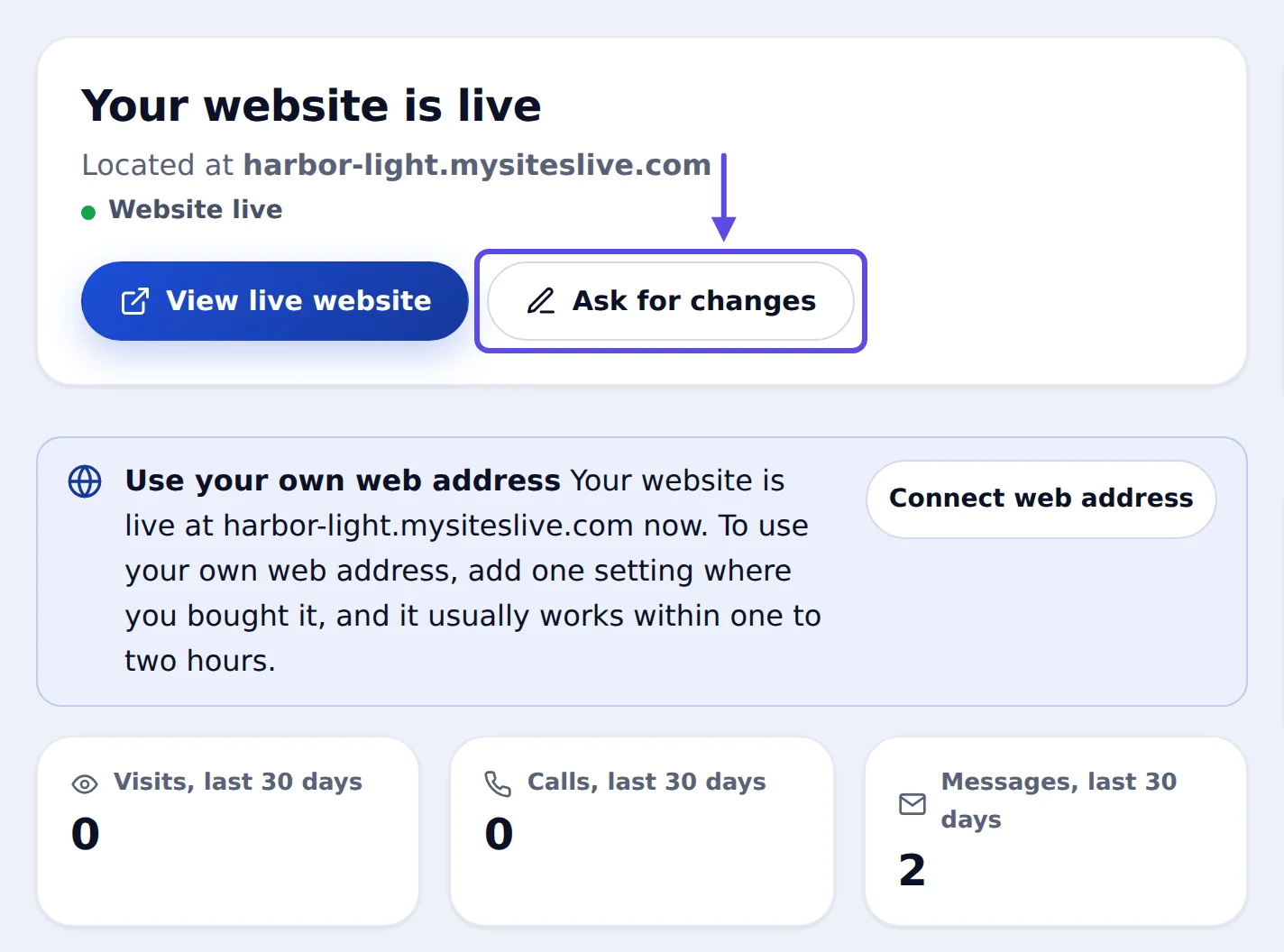
By hand, know the transfer rule. Per ICANN, a registrar may deny a domain transfer within 60 days of the domain's first registration. So a domain bought last month may not move straight away. To find the date, ask the owner to log in to their domain provider and look for when the domain was registered or created. Our post on how to hand over a website covers the domain, the login and the first week, step by step. 11
Google says it can take a few weeks for it to notice a new site or changes to an existing one. Add the live website to Google Search Console under the owner's account, so they keep it. That way, the record stays with the business, whoever looks after the website. 12
Your domain stays yours
Subject: [Business name]: your domain stays yours
Hi [Owner name],
[Business name]'s website is live at [Website address]. To use your own domain, connect it in your login by adding one record at your domain provider, and it stays yours.
If a card payment ever fails, you'll get a reminder, and the website stays online while the card is retried.
If you'd rather not get notes like this, reply "no more notes" and I'll stop.
[Your full name], [Your business name], [your mailing address]
- The owner's domain stays in the owner's name
- The owner connects it from their login
- You checked who holds the name-based address
- A failed card sends reminders in your name
- You know what goes offline, and when
You know it worked when you can tell an owner, in two sentences, who owns the domain, how they connect it and what happens if a card fails. Practice it out loud once.
Tip
Never buy the owner's domain in your own name to save time. It's the first thing a careful owner asks about.
9. How do you score the builder and decide?
Give every check a pass, partly or fail in one sheet. Then drop any builder that fails sending, approval or the domain, however good its websites look. Those three are the checks you'd otherwise do by hand for every client, every month. A pretty page doesn't make up for that work.
By hand, make the scorecard in Google Sheets: one row per check, one column per builder you test, and a notes column for what failed and why. The table below is the scorecard to copy. Fill it in on the night you test, while the details are fresh.
| Check | Pass | Partly | Fail |
|---|---|---|---|
| Real facts | Every fact matches the listing and nothing is invented | A fact or two missing, none invented | An invented review, award, service or year in business |
| First screen | What, where and the one action show without scrolling | Two of the three show without scrolling | A stock headline that could fit any business |
| Phone speed | Largest content within 2.5 seconds and taps answered within 200 milliseconds, per web.dev 7 | Slow to load on a phone, but every button works | The call button or the menu fails on a phone |
| Plain-word changes and versions | A change shows in minutes and the old version comes back | Changes work, but undoing one is done by hand | No way back to yesterday's website |
| Sending | A message in your name with the link and an opt-out line | You copy the link into your own email | The message goes out in the software's name |
| Approval and payment | One link shows the website, the monthly price and the card page | Approval and payment are two separate steps | The owner pays without seeing the website |
| Domain and failed payments | The domain stays the owner's and a failed card gets reminders before anything goes offline | It's unclear who holds the domain | The domain is held in the builder's name with no way out |
The twist: before you decide, run the nine checks on a second business type. A builder that handles a plumber's services well can still fumble a diner's menu or a bakery's order line. You'll sell to more than one type, so test more than one.
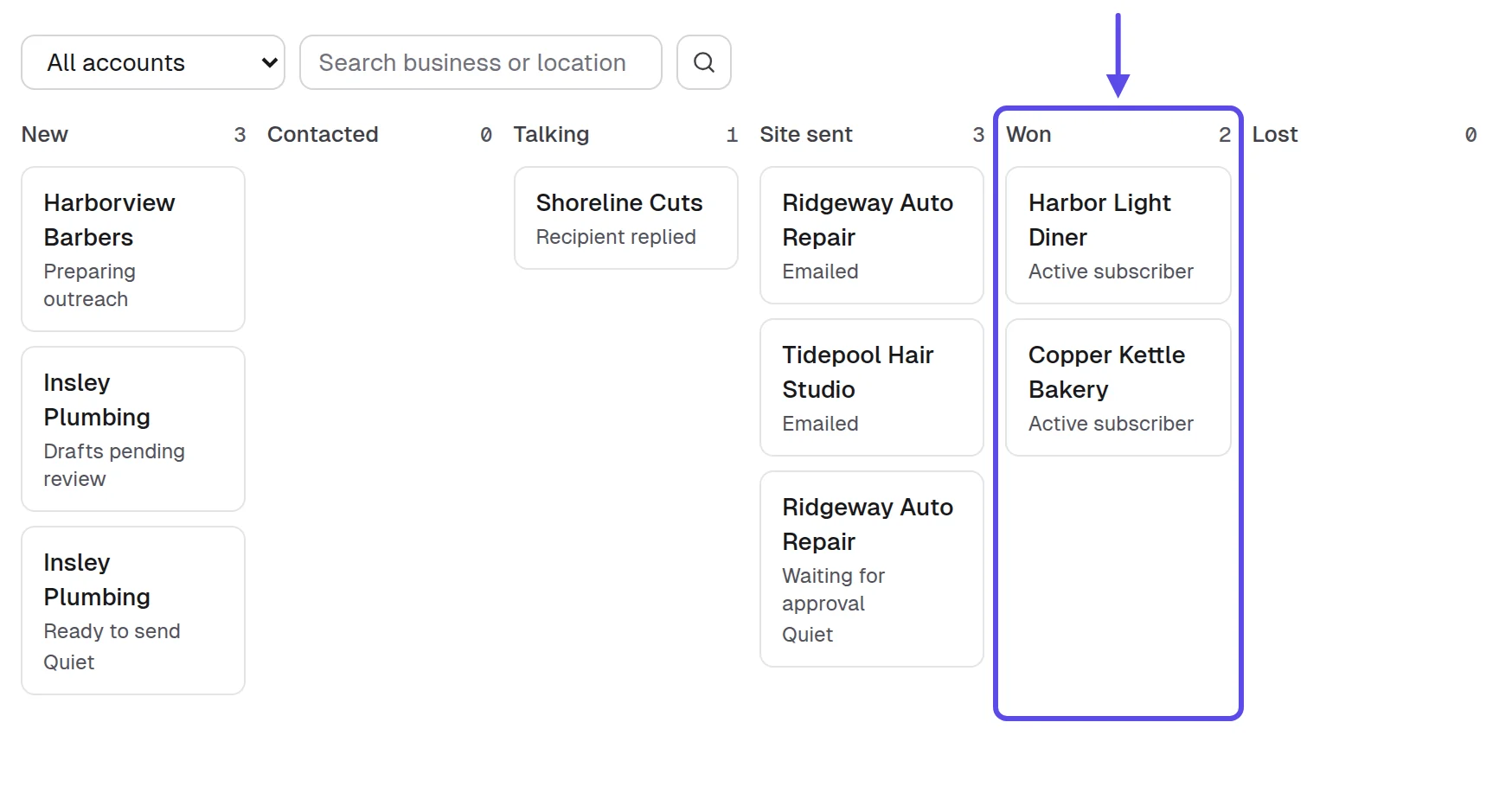
In our app, the Pipeline keeps every business you test by stage, from New to Won and Lost, so your test business sits beside the real ones. Check that the contact-form message from step 4 arrived in the Inbox beside the other businesses' messages.
- One row per check, one column per builder
- Pass, partly or fail in every cell
- A note on what failed and why
- A second business type tested
- A fail on sending, approval or domain rules a builder out
You know it worked when you can name the builder you'll use, the one check it's weakest on, and how you'll cover that check by hand. If you can't name all three, test again.
Tip
Keep the scorecard. Run it again when the builder changes or when you start a new business type.
What do you tell an owner who says they'll use an AI builder themselves?
Agree that they could. Then show their finished website on their phone and name what you do every month that the tool doesn't: checking the facts, making changes, the listing, the domain and the failed card. An owner rarely argues with their own business, finished and ready to look at. Keep it friendly, because you're on their side.
Sit beside the owner and let them scroll on their own phone. Ask what customers ask them on the phone, and show where the website answers it. An owner who sees their own shop, their own hours and their own photos rarely wants to start again from an empty page after closing time.

I'll do it myself
"You're right, you could. It's already built and checked against your listing, though. What you'd be paying me for is keeping it right every month, so you never have to open it."
I tried one already
"What went wrong with it? This one was built from your own listing, then checked by me. If anything's off, I can change it right now while you watch."
What did AI use?
"Only what your business has published: your listing and your current website. I checked every fact against those, and nothing about you was made up. You can change any line you like."
- Checking every fact against the listing before anyone sees the website
- Making the owner's changes in plain words, the day they ask
- Pointing the listing's Website button to the new address after it goes live
- Keeping the domain in the owner's name from the start
- Calling the owner when a card fails, before the website is at risk
Some owners would rather ask you a question than wait for a visit. They can do that on your storefront, your own page with your name and prices. What you pay us for the app is on the pricing page, if you want to check it.
Which rules apply to your emails, your licenses and your business name?
In the US, the CAN-SPAM Act sets what a commercial email must include, as the FTC's guide to it explains. Your licenses, permits and any business name that isn't your own (a DBA) follow the rules for what you do and where you do it, as the SBA's guide explains. The table gives each rule as the guide states it. This isn't legal advice.
| What you do | What the guide says | Where to read it |
|---|---|---|
| Send a commercial email to an owner | In the United States, the FTC's compliance guide to the CAN-SPAM Act says a commercial email must include your valid physical postal address and a clear way to opt out, and opt-out requests must be honored within 10 business days. 9 | the FTC's CAN-SPAM Act compliance guide for business |
| Get licenses and permits for your website business | the SBA's guide to licenses and permits says the license and permit requirements and fees vary with your business activities, your location and the government's rules. 10 | the SBA's guide to licenses and permits, then your state, county or city |
| Trade under a business name that isn't your own | a business name that isn't your own may need registering as a DBA (a trade name or assumed name) with the state, county or city, per the SBA. 10 | the SBA's guide to registering a business, then your state, county or city |
Before your first client, read the SBA's guide to licenses and permits and the SBA's guide to registering a business. Then turn to your local government's pages. Call or visit your city or county clerk's office and ask what a one-person business that builds websites needs. If you'll trade under a name that isn't your own, like Harbor Web Co., you'll need a DBA. Search the business name records to check that the name is free, then fill in the form and pay the fee they list.
How do you know the builder is working for you?
Six things you can count tell you: time to Ready to send, facts you fixed, owners who scroll past the first screen, owners who approve, changes made the same day, and clients still paying after a failed card. Each sign below says what to change when it's weak. These are things to count, not targets.
- Time to Ready to send, from picking a business to a website you'd show. If it's slow, build fewer pages or switch builders.
- Facts you fixed on each build. If the count climbs, call the owner first or pick businesses with fuller listings.
- Owners who scroll past the first screen. If they stop there, rebuild the first screen around the one action their customers take.
- Owners who approve after seeing their website. If few do, change how you show it, in person or by video, not the builder.
- Changes made the day they're asked. If they slip, write requests in plain words and keep the change log current.
- Clients still paying after a failed card. If they drop, call the owner the day the first reminder goes out.
Count these in the Pipeline or in the same sheet as your scorecard, one line per business. Write the date beside each count. Look at them once a week. One bad week says little, but a sign that stays weak tells you what to change.
If two signs stay weak for a month after you've changed what the list says, run the nine checks again on a second builder. Keep the one that scores better on the checks you were doing by hand. Those are the checks that cost you time every month.
Frequently asked questions
Can a small business owner use an AI website builder on their own?
Yes, an owner can. Still, in Clutch's 2025 survey, 45% of small business websites were built by outside partners, more than by in-house teams or owners themselves. What owners pay for is the time, the checked facts and someone who looks after the website every month, so they can get back to running the business. 1
Will an AI website builder make up facts about a business?
It can, when it fills gaps with guesses. A good one builds only from the business's public listing and current website. Check every fact against the listing before anyone sees the website, and never add reviews, awards or years in business that the owner didn't give you.
How long does an AI website builder take to build a small business website?
A build takes minutes. The part that takes longer is your review, since checking the facts and the first screen takes longer than the build itself. Give it that time, because the first screen is what the owner sees first, and a wrong fact there costs you their trust.
Who owns the domain when an AI builder makes the website?
The business owns its domain and its content. The owner connects the domain in their own login, and it stays theirs. Per ICANN, a registrar may deny a domain transfer within 60 days of the domain's first registration, so a domain bought recently may not move straight away. Plan around that before launch. 11
Is it legal to email a small business about a website you built for it?
In the US, the FTC's compliance guide to the CAN-SPAM Act allows commercial email that includes your valid physical postal address and a clear way to opt out, with opt-out requests honored within 10 business days. Other countries have their own rules, so this answer covers owners in the US only. 9
How long until a new small business website shows up on Google?
Google says it can take a few weeks for it to notice a new site or changes to an existing one. Meanwhile, point the Website button on the business's listing to the new address. That way, customers who find the listing reach the new website from the first day it's live. 12
Do customers care whether a small business website was made with AI?
Yes, many do, and what they want is a website that's right and real. In Pew Research Center's June 2025 survey, 76% of Americans said it is extremely or very important to be able to tell whether pictures, videos and text were made by AI or by people. So use the owner's own photos and words, and check every fact before anyone sees it. 14
Sources
- Clutch, “83% of small businesses now have a website” (press release, August 21, 2025)
- CX Dive, “Customers back up their initial searches for local businesses with reviews” (July 11, 2025), on a survey of more than 1,000 US consumers
- Rio SEO, 2025 Local Search Consumer Behavior Study (US consumers; Business Wire, May 21, 2025)
- Ironstone, Lead finder’s searches and results for partners (our own accounts left out), October 8 to November 17, 2026, from our own records read November 20, 2026
- US Census Bureau, “Census Bureau Statistics Shed Light on Self-Employment by Sector and State During Small Business Week” (May 6, 2025), on the 2022 Nonemployer Statistics and County Business Patterns
- US Census Bureau, “Large Firms With at Least 20 Employees Biggest AI Users” (May 26, 2026), from the Business Trends and Outlook Survey
- web.dev (Google), “Web Vitals”
- Pew Research Center, “Mobile Fact Sheet” (survey of US adults, January 30 to June 18, 2026; October 19, 2026)
- Federal Trade Commission, CAN-SPAM Act: A Compliance Guide for Business
- US Small Business Administration, “Apply for licenses and permits” (business guide)
- ICANN, “FAQs for Registrants: Transferring Your Domain Name”
- Google Search Central, “Get your website on Google”
- Stripe Docs, “Payouts”
- Pew Research Center, “How Americans View AI and Its Impact on People and Society” (September 17, 2025; survey of 5,023 US adults, June 9 to 15, 2025)