 Ironstone
On this page
What a website does for a business
A website handles three key moments for a business. First, when a customer searches for the business by name, it shows a clear, real presence. Second, when a friend recommends the business, the referral looks up the site before calling. Third, someone using a phone can tap once to call or get directions. Without a site, every customer relies on whatever an online listing or social page happens to show.
58%
In a 2026 survey for the web host DreamHost, 58 percent of US adults said they often or always check a business's website to confirm information, 45 percent said businesses without a website feel less real, and 39 percent said they had decided not to visit or buy from a business because it had no website. 1
54%
In BrightLocal's 2026 survey of US consumers, 54 percent said they check a business's website after reading positive reviews. 2
Do you need a website if you have a Facebook page?
A Facebook page helps your business, but a website does a different job. They work best together. Here are three main differences between the two.
You do not own the page
Social platforms control the design, the rules, and who sees your posts. An account can be restricted or removed at any time. Your custom domain remains yours.
Not every customer looks there
Plenty of people do not use that social network or stay signed out while browsing. A website opens for anyone who clicks, whether they arrive from a search engine or tap a link on any phone.
The basics are hard to find
On a social page, your opening hours, list of services, and prices get buried underneath older posts and photos. A website puts those facts directly on the first screen so visitors see them right away.
Keep your social page to post news, share photos, and reply to comments. Use your website to show the clear facts local customers need before they call you.
When a business may not need one
A business may not need a site if it stays fully booked with a waiting list, has no plans to grow, or plans to close soon. The same applies to trades where every job comes from a single general contractor. For everyone else, a simple one-page site with phone numbers and hours answers the people who search.
Over 1 in 3
Clutch found that over a third of small businesses without a website believe a website isn't relevant to them. 3
What a small business website should have
Customers look for the same key details in a predictable sequence when they open a local website.
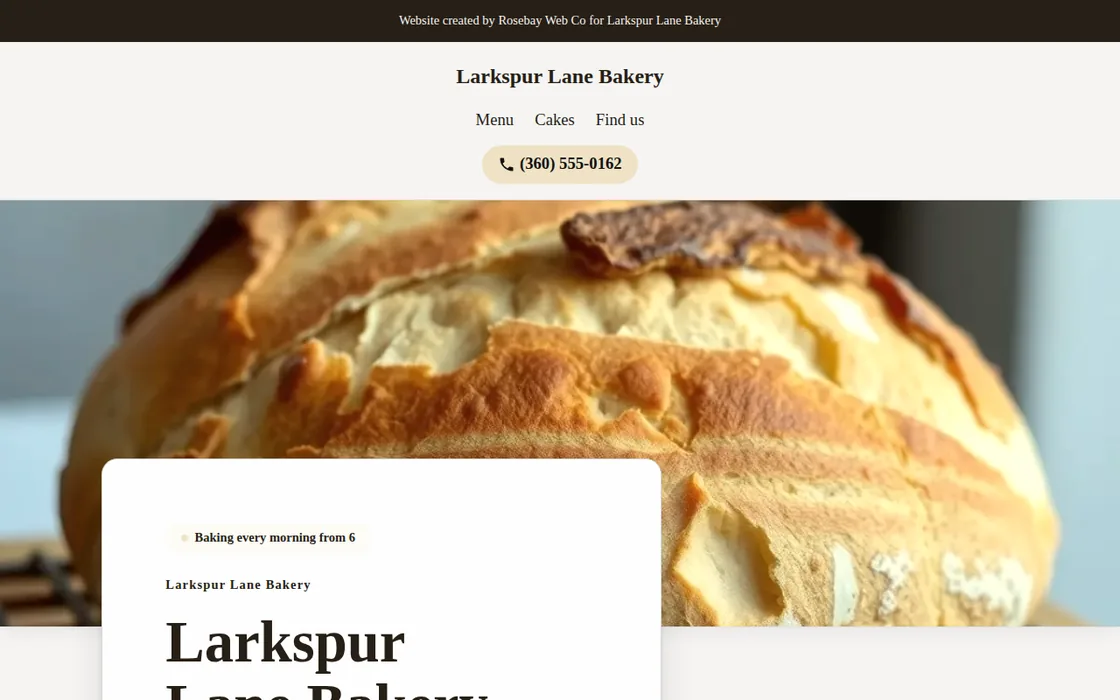
- Business name and services shown right on the first screen
- Phone number that lets callers tap to dial immediately
- Opening hours kept accurate for regular days and holidays
- Street address or service area with clear directions
- List of services, menu items, or prices published clearly
- Clear photos of the physical location, staff, or products
- Simple way for visitors to ask a question, book, or order
- Fast loading speed that displays safely on mobile phones
85%
BrightLocal's 2025 survey of US consumers found 85 percent consider contact information and opening hours an important factor when choosing a local business. 4
Answering an owner who says no
When an owner says they do not need a site, listen to their reasons first. Most common objections have a quick, simple answer. Showing them the finished website you built usually clears up their doubts faster than a long conversation.
"My Facebook page is enough"
A page helps, but a website opens for everyone on the open web without needing an account. It shows your hours and phone number right at the top, and your custom domain stays yours.
"Word of mouth keeps us busy"
That is great. People who hear about a business still search for the name before calling, and a website is what they look for to confirm your details.
"It costs too much"
You charge the business a monthly fee that covers their site, secure hosting, and regular updates instead of handing them a large upfront bill for the build. You set your own prices, and the owner can cancel at any time.
"I don't have time"
The website is already built using the information you already publish online. You only need to look it over and approve it. Any future changes take a quick message to complete.
Where to go next
Read our guide on how to sell AI websites to local businesses to see the full sales process in action. If you need to build your contact list, check our post on finding clients for a web design business to locate local owners who need a site today.
Frequently asked questions
Is a website necessary for a small business?
A website is not required by law, but many customers look for one before they call or visit a business. It is the single online space where the business owner controls every detail visitors see.
What happens if a business does not have a website?
Customers only see details listed on third-party directories and social pages, which are often out of date. As a result, some people choose to take their business to a competitor with an official site.
Is my business too small for a website?
No. A simple one-page site with your business name, hours, phone number, and list of services is enough for many local businesses.
Do I need a website if I have a Facebook page?
You can keep your page for sharing photos and social updates. A website reaches everyone on the web, puts your contact details on the front screen, and your domain stays yours.
Why would a business not have a website?
Business owners usually skip getting a website due to limited time, high costs, or not realizing what a site does for them. Some owners are already fully booked and feel no pressure to grow.
Is a one-page website enough for a small business?
Yes, a single page works well for many businesses. Displaying your business name, main services, hours, phone number, location, and photos gives many callers the details they need to contact you.
Sources
- DreamHost, 2026 Local Business Trust Index (1,201 US adults, November 2025)
- BrightLocal, Local Consumer Review Survey 2026 (1,002 US adults, February 2026)
- Clutch, “83% of small businesses now have a website” (press release, August 21, 2025)
- BrightLocal, Consumer Search Behavior (1,000 US adults, April 2025)